DIY Paddle Leash / Paddle Parkby Mike Buckley - 2005 The subject of the pros and cons of paddle leashes came up on the Commuity Forum here - a quick search on the web revealed prices ranging from £8 through to an unbelievable £20! A quick rummage in the garage found the following:
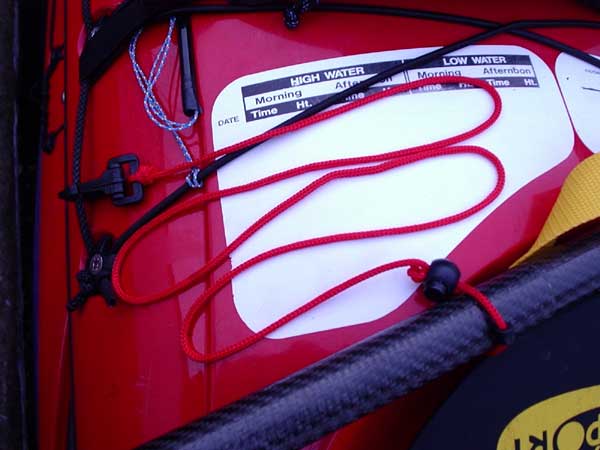
10 mins and £nil later I had this:
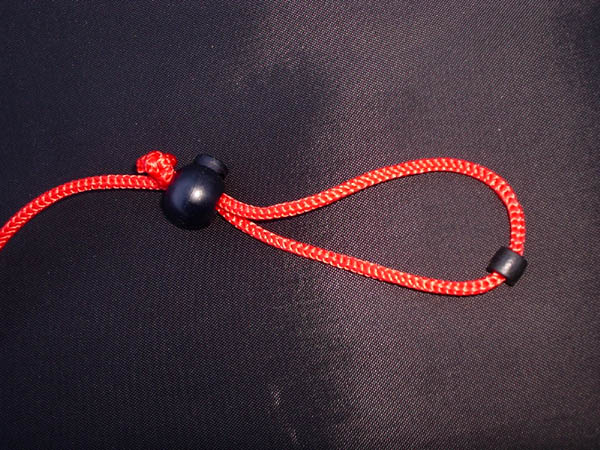
Detail of the cord-lock, loop and bead. Figure-of-Eight used as the stopper knot.
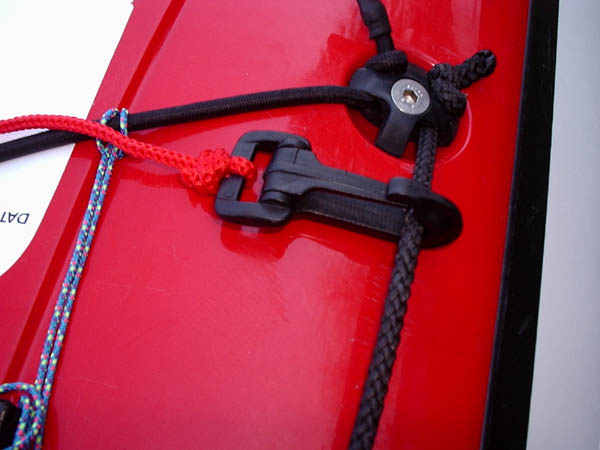
Detail of the hook - cord is attached with a half Fishermans Knot, for anyone pedantic enough to need to know! (I've subsequently found a small stainless-steel hook - with a swivel - it cost about £2 in a chandlers - it's also rather more substantial than the plastic hook shown in the pictures.)
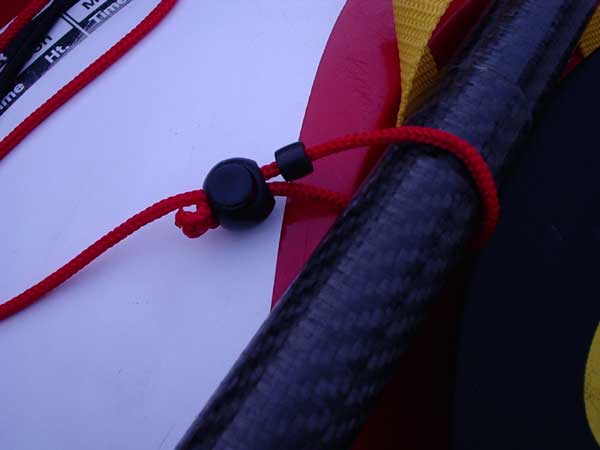
Detail of the loop (slack) on the paddle.
On the other hand, if you really have to have a shiny, nicely packaged and commercially made paddle leash, (all the "usual suspects" will have them) Northwater and others offer a length of bungee, with a hook at one end and velcro to attach it to the paddle for around £10 - or you can spend well over £20 for the same thing but with a stretchy wire coil - oh, and "swivels on both ends eliminate twisting". In the final analysis, if you think a leash is a good idea, a length of scrap cord tied to the boat and the paddle would do the job just as well - - - - If you want to use it as a Paddle Park, you either open the loop and slip the paddle(s) into it or just secure the looped end round the deck lines using either a simple hitch like a Round Turn and Half Hitches or a Larks-head and then use the hooked end to wrap round the paddle(s), securing with the hook. A final word of caution - I'd strongly suggest that a paddle leash is thought of only as a back-up, not the solution to the possibility of your paddle floating away. This discussion is worth a look at. If you haven't learned to hang onto your paddle, and your boat, should you be in the water, you really shouldn't be out in a kayak. For more DIY's, see the DIY, Boat & Kit Repairs, Maintenance & Modifications page of the Almanac. © Mike Buckley - 2005 Note: Do use my design for your own personal use. If you want to copy it to make money, perhaps you'd be kind enough to do the decent thing and ask me first so we can agree on how much of a donation you're going to make to RNLI on your sales profits from stealing someone else's idea.
|